
Application of nanofibers in medicine
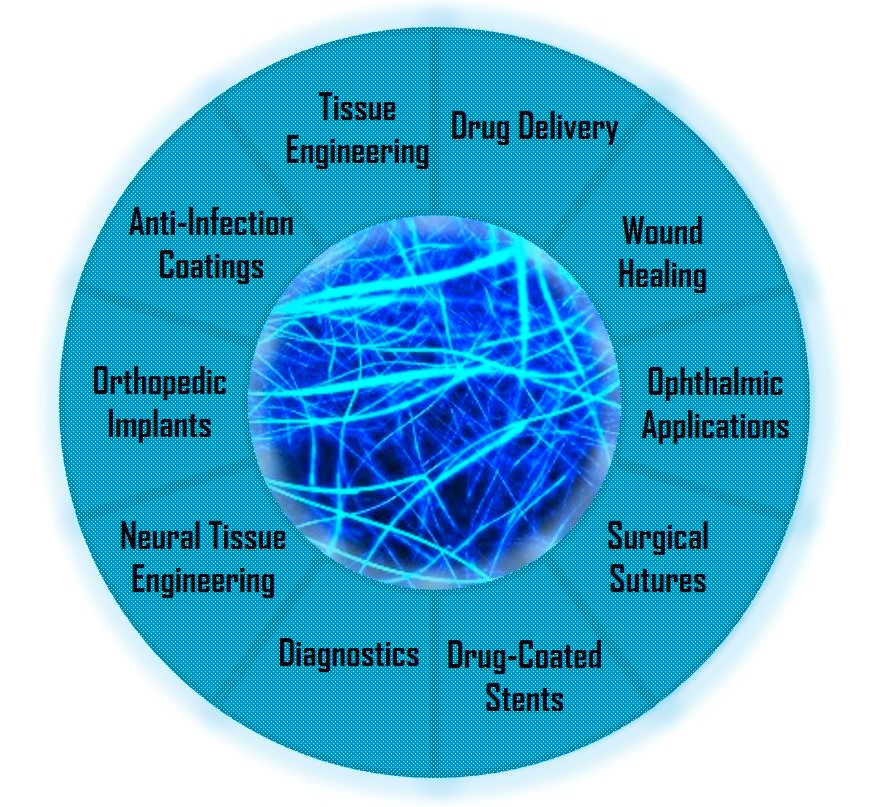
Nanofibers, with their distinctive properties such as high surface area, tunable porosity, and biocompatibility, have emerged as invaluable tools in the realm of medicine. This article explores the diverse applications of nanofibers, showcasing their pivotal role in revolutionizing drug delivery, wound healing, tissue engineering, surgical procedures, diagnostics, neural tissue engineering, orthopedic implants, infection prevention, and ophthalmic applications.
-
Drug Delivery:
Nanofibers serve as efficient carriers for controlled and sustained drug release. Their heightened surface area enhances drug-loading capacity, while their porous structure facilitates the controlled release of pharmaceutical agents, optimizing therapeutic outcomes.
-
Wound Healing:
Nanofiber dressings act as scaffolds for cell adhesion and migration, fostering tissue regeneration. With the inclusion of antimicrobial agents, these dressings create a sterile environment conducive to accelerated wound healing.
Electrospun nanofibers, designed to mimic the extracellular matrix, provide a biomimetic environment for cells involved in tissue repair, enhancing the overall wound healing process.
-
Tissue Engineering:
Nanofibrous scaffolds, offering a three-dimensional structure, support cell growth and tissue formation in applications ranging from organ and bone regeneration to skin and cartilage repair. Tailoring the architecture of nanofibers to mimic natural tissue structures creates a microenvironment suitable for cell proliferation and differentiation.
-
Surgical Sutures:
Nanofibrous materials contribute to the development of surgical sutures with enhanced mechanical strength and biocompatibility. These sutures minimize tissue damage and inflammation while promoting expedited healing processes.
-
Drug-Coated Stents:
Utilizing nanofibers to coat cardiovascular stents with drug-eluting properties enables controlled release, preventing restenosis, and improving the long-term efficacy of the stent.
-
Diagnostics:
Nanofiber-based sensors play a crucial role in diverse diagnostic applications. Functionalized nanofibers can detect specific biomolecules, pathogens, or changes in physiological conditions, facilitating early disease diagnosis.
-
Neural Tissue Engineering:
Nanofibrous scaffolds find application in neural tissue engineering by supporting the growth and differentiation of neural cells. These scaffolds aid in repairing damaged nerves and developing artificial neural interfaces.
-
Orthopedic Implants:
Nanofiber-reinforced composite materials contribute to the development of orthopedic implants with superior mechanical properties. These implants enhance integration with surrounding tissues and provide long-term stability.
-
Anti-Infection Coatings:
Nanofiber coatings, applied to medical devices like catheters and implants, prevent bacterial adhesion, mitigating the risk of infections and enhancing patient safety.
-
Ophthalmic Applications:
In ophthalmology, nanofibers are utilized in the development of contact lenses with enhanced comfort and controlled drug release, addressing conditions such as dry eyes or glaucoma.
Conclusion:
The versatility of nanofibers renders them indispensable in addressing a spectrum of medical challenges, from refining drug delivery to advancing tissue regeneration. Ongoing research and development in this field are poised to unveil even more innovative applications, solidifying nanofibers’ status as a transformative force in medicine.
Leave a Reply
Want to join the discussion?Feel free to contribute!